

DANDELION GUIDE: PLANNING AND SUPPORT
Choosing a Trustee or Executor
Who carries out your wishes?
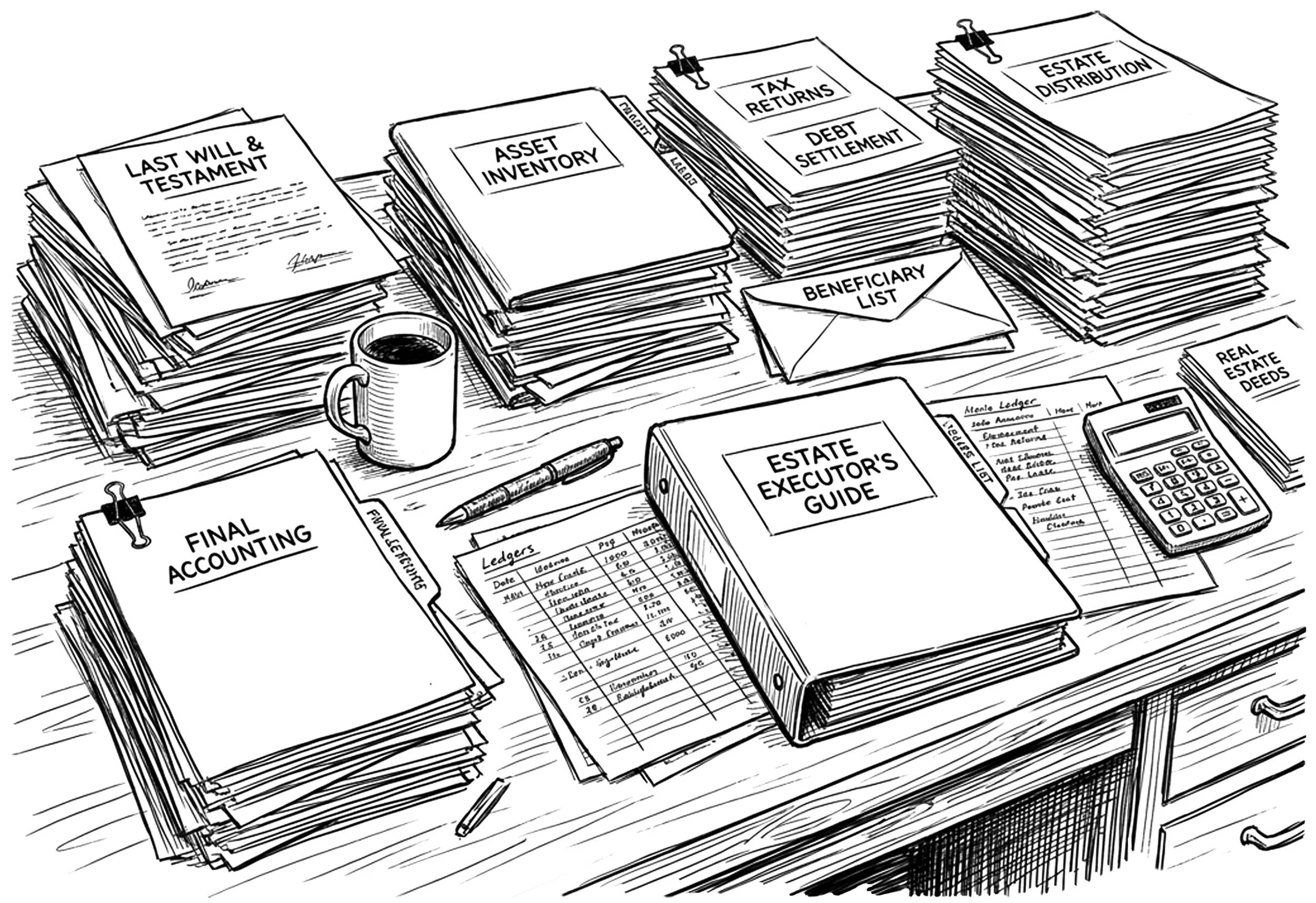
Choosing a trustee or executor (depending on your state) is an important decision—they’ll be responsible for carrying out your wishes, managing assets, paying debts and taxes, and distributing your estate. Here’s a clear framework to help you choose wisely:
✱ Start with the key qualities.
An ideal executor/trustee should be:
Trustworthy - This is non-negotiable. They’ll have access to money, documents, and sensitive information.
Organized and detail-oriented - Executors handle paperwork, deadlines, and coordination with banks, courts, and beneficiaries. You need a rule follower.
Financially competent - They don’t need to be a financial expert, but they should be comfortable managing accounts and asking professionals for help.
Reliable and available - Estate administration can take months or years. Choose someone who has the time and capacity.
Able to handle conflict - If your family has tension, the executor/trustee may need to stay neutral and enforce your wishes calmly.
✱ Decide who fits best.
Common choices:
Spouse or partner – Often the first choice, but consider age, health, and emotional burden.
Adult child – Works well if they’re responsible and respected by siblings.
Sibling or other relative – Useful if children are too young or unsuitable.
Close friend – Sometimes a better neutral choice than family.
Professional executor/trustee (attorney, bank, trust company) – Best for complex estates or high conflict.
Consider the logistics:
-
Simple estate (few assets, no disputes): a capable family member is usually fine.
Complex estate (business ownership, real estate in multiple states, blended family, special-needs beneficiaries): consider a professional executor/trustee, or co-executors/trustees (e.g., a family member + a professional). Be cautious with co-executors/trustees—shared authority can slow things down if they disagree.
-
The executor/trustee is usually entitled to reasonable compensation, to be paid by the estate. This is often set by state law or your will.
Family members may waive fees, but the workload can be heavy.
Professionals charge fees but provide expertise and neutrality.
Safeguard your decision:
-
Life changes. Your first choice may become unable or unwilling to serve. Name at least one alternate executor/trustee.
-
Before officially naming anyone, ask your first choice if they’re willing to serve and explain what the role involves. This can be a heavy role and they need to know what they are agreeing to do.
-
Clearly name the executor/trustee in your will.
Specify powers if your estate is unusual.
Review your choice after major life changes (marriage, divorce, deaths, moves).
Make sure your executor/trustee knows where the important documents will be kept.
Your estate plan should reflect facts as you know them today. Those facts will change in time and it is important to update your estate plan accordingly.

✱ Ask Yourself…
Will this person be professional towards all beneficiaries?
Do they live nearby (or can they work remotely)?
Will naming them cause resentment or disputes?
Are they likely to outlive me?
Be realistic about your family dynamics. Death and money can create conflict even if there is no conflict to be had.